

Asbestos support for surveyors brings together the hands‑on services, regulatory guidance and technical resources you need to find, assess and manage asbestos‑containing materials (ACMs) in commercial buildings. This guide describes the main survey types, how surveyors help duty holders meet the Control of Asbestos Regulations 2012 (CAR 2012), the training and qualifications that underpin competent practice, and why UKAS accreditation matters for sampling and laboratory testing. You’ll find clear checklists, comparison tables and practical routines for building registers, scheduling re‑inspections and integrating specialist work such as air monitoring and hazardous‑materials inspections. The advice focuses on turning technical outputs — registers, risk assessments and inspection schedules — into safer projects and defensible records. It also outlines training routes like P402 and the RSPH Level 3 for professional development. Read on for compact tables, actionable lists and worked examples that make asbestos support practical for surveyors across the UK.
Key Types of Asbestos Surveys for Commercial Properties in the UK

Knowing the purpose of each survey type helps you pick the right scope, sampling approach and deliverables to control asbestos risk. Surveys vary by objective: management surveys find and assess ACMs in occupied buildings; refurbishment & demolition (R&D) surveys are intrusive and identify hidden materials before works; pre‑purchase surveys flag obvious risks for buyers; and re‑inspections track condition changes and keep registers current. Selecting the correct survey reduces project delays, protects workers and helps duty holders meet CAR 2012. The table below summarises each survey type, its purpose and typical outputs to guide your choice in common scenarios.
Different survey types are tailored to specific regulatory and project needs.
| Survey Type | Purpose | Typical Deliverables |
|---|---|---|
| Management asbestos survey | Identify ACMs during normal occupancy and assess condition to inform the duty to manage | Asbestos register, condition ratings, recommended management actions |
| Refurbishment & demolition (R&D) survey | Expose areas that will be disturbed to locate hidden ACMs before intrusive works | Intrusive inspection records, sample results, survey drawings, removal recommendations |
| Pre‑purchase asbestos survey | Flag visible ACMs and outline risk for prospective buyers | Executive summary, register extract, statement of limitations |
| Re‑inspection asbestos survey | Confirm condition changes and update the register after management actions | Updated register, change log and revised risk assessments |
This snapshot shows how survey choice affects reporting and site workflows and leads into how management surveys support CAR 2012 compliance.
How Management Surveys Help Meet CAR 2012 Obligations
A management asbestos survey aims to locate, as far as is reasonably practicable, suspected ACMs in areas used during normal occupancy without major disturbance. It provides the factual basis for an asbestos register and a risk‑based management plan, helping duty holders identify, assess and control asbestos risks under CAR 2012. Surveyors record material type, location, extent, condition, recommended controls and priority actions in a structured report that feeds the duty holder’s register. Best practice also includes advising re‑inspection intervals, capturing photographic evidence and clearly stating scope limitations so clients know where an R&D survey will be needed. These outputs let surveyors produce practical management plans and brief duty holders on next steps.
When Refurbishment & Demolition Surveys Are Required
R&D surveys are necessary when planned works will disturb the building fabric and could release asbestos fibres if ACMs are present. Unlike management surveys, R&D surveys are intrusive: they open voids where safe, remove small sections to inspect hidden materials and take samples to form a complete picture before works begin. Surveyors following R&D protocols maintain chain‑of‑custody for samples and interpret lab results to advise contractors on removal or safe‑working measures. R&D reports typically include detailed drawings, sample logs and clear restrictions for demolition or refurbishment phases. Clear communication of R&D findings prevents unexpected stoppages and protects site teams during the works.
Where projects involve significant structural change or demolition, specialist soft‑strip and enabling services are often needed to remove non‑structural elements and hazardous materials safely, preparing the site for follow‑on works.
Ensuring Compliance with UK Asbestos Regulations and Risk Assessments
Meeting CAR 2012 in practice means turning legal duties into auditable, repeatable actions that duty holders can implement and evidence. The duty‑to‑manage cycle is straightforward: find ACMs, assess condition and risk, record findings in a register, put a management plan in place, and review and re‑inspect periodically. Surveyors support duty holders by delivering defensible registers, prioritised risk assessments, re‑inspection schedules and advice on contractor competence and safe working methods.
The table below maps CAR 2012 responsibilities to practical surveyor actions and expected documentation — a quick reference for audits and handovers.
| Entity | Responsibility/Action | Outcome/Documentation |
|---|---|---|
| Duty holder | Find and assess ACMs on their premises | Asbestos register and annotated site plan |
| Surveyor | Deliver the appropriate survey and sampling | Detailed report, sample logs and laboratory results |
| Duty holder | Produce and apply a management plan | Management plan, work instructions and training records |
| Both | Review findings and re‑inspect as needed | Re‑inspection reports, updated register and action log |
Use the short checklist below when advising clients on practical compliance steps.
- Locate ACMs: Choose and carry out a management or R&D survey that matches the project scope.
- Assess and record: Apply risk ratings and add evidence to the asbestos register.
- Plan and act: Produce a management plan with clear responsibilities and remediation timelines.
- Monitor and review: Set re‑inspection dates and keep an action log linked to the register.
This checklist helps duty holders keep auditable records and leads into structuring an effective management plan.
Duty Holder Responsibilities Under the Control of Asbestos Regulations 2012
Under CAR 2012, duty holders must take reasonable steps to determine whether asbestos is present, assess the risk and prevent or control exposure. In practice this means commissioning the right surveys, keeping an up‑to‑date register, implementing a management plan that assigns responsibilities and control measures, and making sure contractors and staff are informed and competent. Surveyors support this by delivering clear reports, robust risk ratings and practical remedial options. Good communication and record‑keeping — a maintained register and a documented management plan — are central to demonstrating compliance during inspections.
Developing and Implementing Effective Asbestos Management Plans
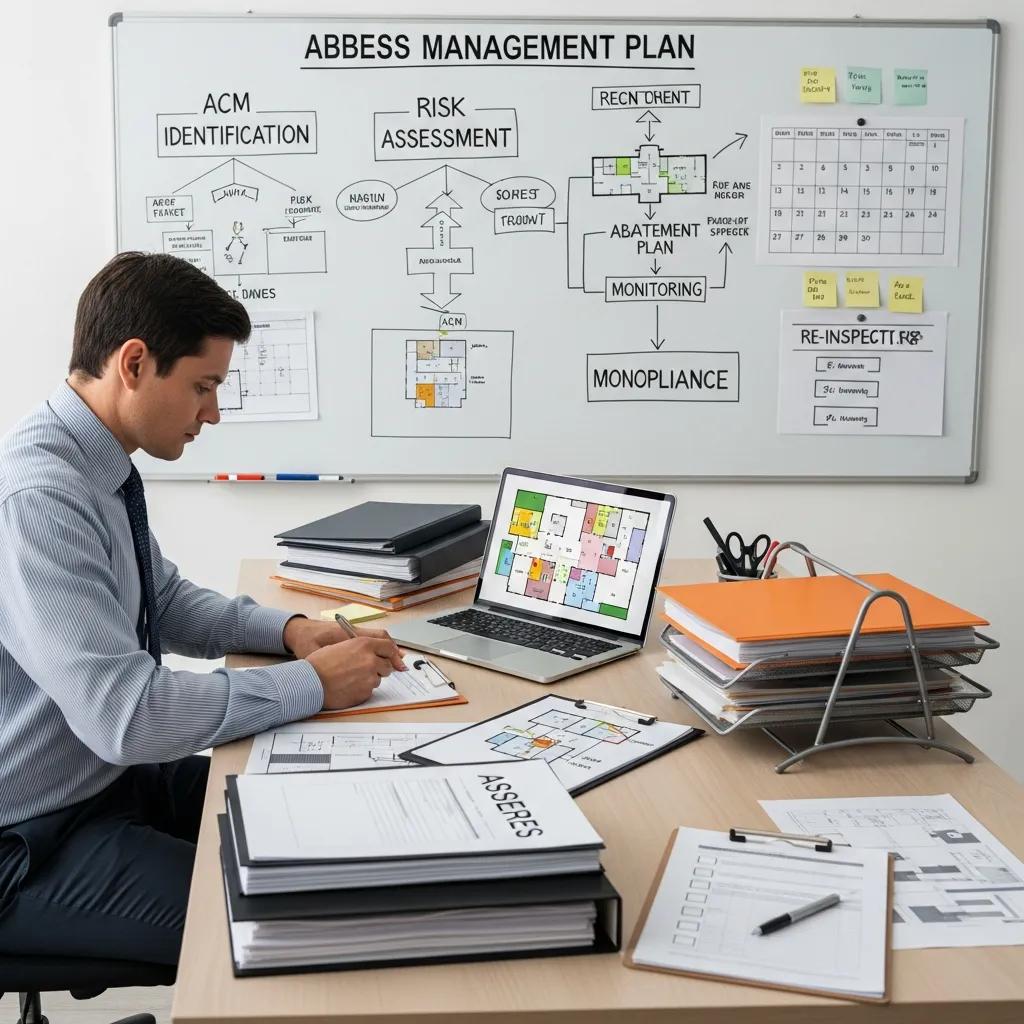
A strong management plan sets objectives, assigns responsibilities, documents procedures and sets review cycles so controls remain effective and auditable. Key elements include scope and policy, a register summary, risk‑assessment method, contractor notification procedures, emergency response steps and a training schedule. Surveyors add technical appendices — full survey reports, sample results and site drawings — that feed decision‑making. Regular audits and re‑inspections with recorded follow‑ups keep the plan current; integrating air monitoring where appropriate adds assurance. With a plan in place, duty holders can demonstrate active control and regulatory compliance.
Qualifications and Training Surveyors Need for Asbestos Support Services
Competent surveying rests on asbestos awareness plus recognised vocational and academic qualifications for sampling, surveying and reporting. At minimum, anyone likely to disturb ACMs should have asbestos awareness training; professional surveyors commonly hold P402 and the RSPH Level 3 Award to validate field competence and report writing. Training boosts credibility, ensures correct sampling technique and reduces legal risk by producing defensible reports. The table below compares key qualifications, who they suit and the competencies they deliver to help plan team development.
These qualifications sit on established competency pathways for surveying and sampling.
| Qualification | Who it’s for | Competencies gained |
|---|---|---|
| Asbestos awareness training | All staff who may encounter ACMs | Basic recognition, reporting and avoiding disturbance |
| P402 certification | Practising asbestos surveyors and samplers | Intrusive survey technique, sampling protocols and report writing |
| RSPH Level 3 Award in Asbestos Surveying | Surveyors seeking formal academic recognition | Survey planning, hazard assessment and technical reporting |
The progression moves from awareness to vocational competence and formal academic recognition — use this to shape training for your survey team.
- Start with awareness: Make sure all staff can spot and report ACMs.
- Progress to vocational awards: P402 for hands‑on sampling; RSPH Level 3 for formal surveying competence.
- Maintain CPD: Keep skills current with practical refreshers and updates to HSE guidance.
These training steps raise survey quality and lead into the specific value P402 adds.
How P402 Certification Strengthens Surveyor Competence
P402 shows practical competence in intrusive survey technique, safe sampling, chain‑of‑custody and report preparation — the skills clients, contractors and developers expect. Certified holders can collect samples to accepted protocols and interpret lab results to produce clear recommendations for removal or management. P402 aligns field practice with laboratory requirements, reducing sampling errors that might affect decisions. On projects with intrusive access or complex sampling, P402‑qualified staff provide visible technical assurance that complements academic awards like the RSPH Level 3.
The Role of the RSPH Level 3 Award in Asbestos Surveying
The RSPH Level 3 Award gives surveyors a recognised, structured route to demonstrate comprehensive understanding of survey planning, hazard identification and reporting standards. It complements practical qualifications by emphasising theory, legislation and report structure that support legal defensibility. Surveyors with RSPH Level 3 are well placed to interpret HSE guidance such as HSG264, advise duty holders on compliance and justify methodology during audits. Combining vocational competence (P402) with RSPH credentialing strengthens field delivery and client confidence.
Why Choose UKAS‑Accredited Surveyors for Reliable Sampling and Testing?
UKAS accreditation shows that inspection and testing processes meet recognised standards and that laboratories operate with appropriate quality control. For surveyors and clients, accreditation lowers risk because sampling, chain‑of‑custody, analysis and reporting follow documented procedures and traceability. Working with UKAS‑accredited providers improves the chances reports are accepted by regulators and insurers and provides a defensible audit trail in disputes. The list below summarises the practical advantages of accredited partners so teams can decide with confidence.
Key practical benefits of UKAS accreditation include:
- Traceable quality: Accredited workflows enforce consistent sampling and testing standards.
- Regulatory confidence: Accreditation supports acceptance of results during inspections and disputes.
- Reduced legal risk: Documented QA and traceability create defensible evidence for audits.
These points explain why surveyors should prioritise accredited partners and lead into what accreditation means for report quality.
What UKAS Accreditation Means for Survey Quality and Compliance
UKAS accreditation for inspection bodies and laboratories means compliance with standards such as ISO/IEC 17020 (inspections) and ISO/IEC 17025 (testing), which set out competence, impartiality and traceability requirements. In practice this delivers robust QA, validated methods for fibre counting and bulk analysis, and formal corrective‑action processes. For surveyors, using accredited labs reduces challenges to analytical validity and ensures sample handling and reporting meet regulator and client expectations. Accredited reports therefore strengthen decision‑making and legal defensibility — always check accreditation before appointing testing services.
How ACMS Compliance Delivers UKAS‑Accredited Surveying Nationwide
ACMS Compliance provides nationwide asbestos and hazardous‑materials services, delivering management, R&D, pre‑purchase and re‑inspection surveys designed to meet CAR 2012 obligations. We combine local delivery with centralised quality assurance, coordinating certified samplers and UKAS laboratory workflows to preserve traceability from site to analysis. If you need extra capacity, ACMS Compliance can augment in‑house teams with accredited sampling, risk assessments and management‑plan inputs that fit project schedules and compliance needs. For questions about accreditation scope, sampling logistics or consultancy support, contact ACMS Compliance to discuss site‑specific options.
How Specialist Asbestos Services Help Surveyors Identify Hazardous Materials
Specialist services — airborne fibre monitoring, UKAS laboratory analysis and wider hazardous‑materials inspections — provide verification and extended scope beyond standard surveys. These services confirm clearance after removal, quantify exposures during works and identify co‑contaminants such as lead or silica that affect remediation. Surveyors use specialist data to refine risk assessments, adjust controls and produce evidence for sign‑off or handover. The short list below shows common specialist services and when to commission them.
- Air monitoring: For clearance testing and to validate controls during high‑risk work.
- UKAS laboratory analysis: For definitive material ID and fibre quantification.
- Hazardous materials inspections: Where multiple contaminants could change remediation strategy.
Benefits of Air Monitoring and Analytical Services for Surveyors
Air monitoring and laboratory analysis verify that controls work and that airborne fibre counts meet clearance criteria — essential for reoccupation and compliance. Monitoring gives immediate feedback during works so contractors and surveyors can tweak controls if levels change, while lab results provide definitive counts and material ID. Interpreting these data helps surveyors communicate risk to duty holders and make informed calls about stoppages, extra controls or continued monitoring. Clear monitoring reports also strengthen management plans and the audit record for clients.
How Hazardous Materials Inspections Complement Asbestos Surveying
Hazardous materials inspections widen the risk assessment to include lead paint, silica, PCBs and other contaminants common in older buildings. Coordinated inspections reduce rework by identifying concurrent hazards before work starts, enabling integrated remediation plans and a single brief for contractors. Combined reporting sets out multi‑hazard controls, sequencing and likely cost implications, improving project planning and reducing unexpected stoppages. Early inclusion of hazardous materials inspections supports safer, more efficient delivery and clearer advice for duty holders.
Common Surveyor Questions About Asbestos Support — Short Answers
Surveyors commonly want concise, practical answers on legal duties, re‑inspection timing, contractor competence and when to call in specialists. The short Q&A below gives immediate, usable guidance — and signposts when to ask a compliance specialist for site‑specific analysis or a quotation.
Below are brief answers to frequent questions.
- What are the legal requirements for asbestos management in commercial properties?: CAR 2012 requires duty holders to identify ACMs, assess risk, record findings and manage or control exposure with a documented management plan. Surveyors should reference HSE guidance and make responsibilities and records clear in the register.
- How often should asbestos be re‑inspected and surveyed?: Re‑inspection frequency is risk‑based — high‑risk materials may need checks every 6–12 months, medium risk typically annually, and low risk every 2–5 years — with adjustments for condition changes or planned works. Record the rationale for each interval to support audits.
- When should I recommend air monitoring or specialist laboratory tests?: Recommend air monitoring for clearance and any work that could release fibres; use UKAS testing for definitive fibre counts and material identification. Include monitoring plans and clearance criteria in the management plan.
These concise answers cover immediate operational needs and lead into how to get site‑specific support.
What Are the Legal Requirements for Asbestos Management in Commercial Properties?
Legally, duty holders must take reasonable steps to find ACMs and manage exposure under CAR 2012, and proportional surveys and records are the evidence of action. Surveyors advising duty holders should produce clear reports that populate the register and recommend management or removal based on risk. HSE guidance offers technical references on sampling and management — cite relevant guidance when justifying methodology. Practical next steps for duty holders are commissioning the right surveys, writing a management plan, training staff and scheduling re‑inspections to create an auditable compliance trail.
How Often Should Asbestos Be Re‑Inspected and Surveyed?
Re‑inspection intervals should be risk‑based and recorded: high‑risk, damaged or friable ACMs generally need checks every 6–12 months; medium‑risk items typically annually; low‑risk, non‑friable materials every 2–5 years. Factors that influence frequency include condition, occupancy, planned works and environmental exposure. Each re‑inspection should update the register and management plan and capture any actions taken — this documents the rationale for the chosen interval during audits and shows asbestos is under active management.
How Can I Get Site‑Specific Advice or a Quote for Asbestos Support?
For site surveys, compliance audits or bespoke management plans, engage specialist consultants who combine accredited sampling, technical reporting and compliance advice. ACMS Compliance is a nationwide consultancy offering asbestos surveying, risk assessments, removal coordination and ongoing compliance support aligned with CAR 2012. Contact ACMS Compliance to discuss scope, accreditation questions or to request a costed proposal tailored to your site.
Frequently Asked Questions
What Should Surveyors Consider When Choosing an Asbestos Survey Type?
Choose a survey type based on project aims, building condition and the planned work. Consider occupancy, the likelihood of disturbing ACMs and regulatory obligations. Understanding the differences between management, refurbishment and demolition surveys ensures you select the right approach to identify and assess ACMs and to advise on appropriate controls under CAR 2012.
How Can Surveyors Stay Updated on Asbestos Regulations and Best Practices?
Stay current by engaging with professional bodies, attending accredited training and subscribing to industry updates. The HSE website is a primary source for legislative changes and guidance documents. Regular workshops, conferences and peer networks also help share practical experience and keep survey techniques and compliance practice up to date.
What Are the Consequences of Non‑Compliance with Asbestos Regulations?
Non‑compliance can lead to significant penalties, including fines and possible criminal action, and it increases health risks to workers and the public. Enforcement actions — stop‑work notices or mandatory remediation — can disrupt projects and incur substantial costs, while reputational damage and liability are also real threats. Compliance is essential to protect people and projects.
How Do Surveyors Communicate Asbestos Risks to Clients Effectively?
Communicate risks with clear, structured reports and simple visuals where helpful. Highlight critical risks, recommended actions and legal obligations, and tailor language to the client’s technical level — use plain English for non‑technical audiences. Regular updates and open dialogue about monitoring and management build trust and help clients meet their duties.
What Role Does Technology Play in Asbestos Surveying and Management?
Technology improves efficiency and accuracy: digital reporting tools speed data collection and produce consistent reports, GIS mapping helps locate ACMs across sites, and advances in lab analysis increase precision in material identification and fibre counting. Use technology to streamline workflows and strengthen the evidence base for decisions.
How Can Surveyors Ensure the Safety of Workers During Asbestos Removal Projects?
Protect workers with thorough risk assessments, clear management plans and appropriate training. Ensure personnel have asbestos awareness, specify correct PPE and monitor air quality during works. Communicate safety procedures to contractors and emergency arrangements to all on site — these measures reduce exposure risk and support safe project delivery.
Conclusion
Practical asbestos support helps surveyors and duty holders meet CAR 2012, deliver safer projects and create defensible records. By using the right survey types, structured management plans and recognised training routes, teams can improve efficiency and confidence. Working with accredited providers and specialist services further strengthens risk control and auditability. For tailored assistance and expert advice, get in touch with ACMS Compliance.